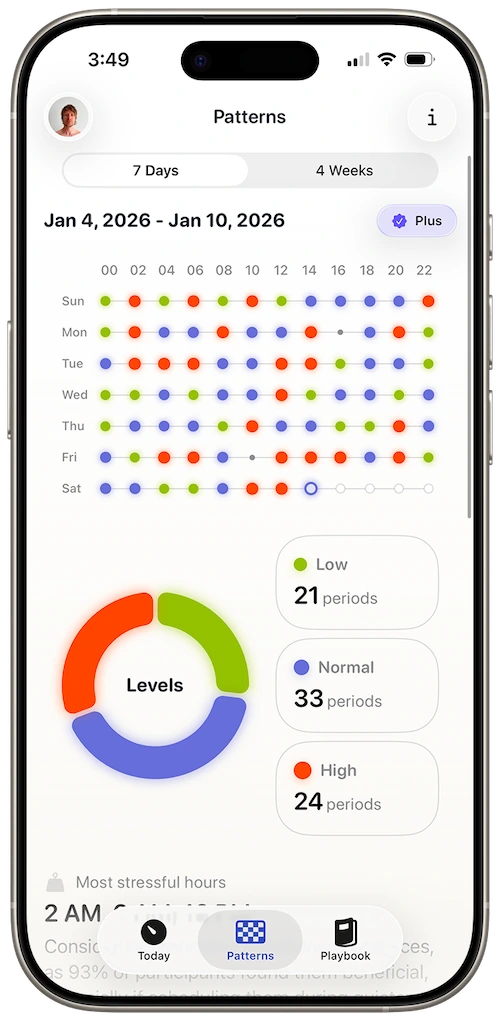
The hardest part of overtraining is that you only recognise it after the damage is done.
HRV suppression often starts weeks before injury, illness, or the plateau you can't explain.
Overtraining is not one bad workout. It’s the mismatch between load and recovery sustained long enough that adaptation reverses — performance drops, mood flattens, sleep stops restoring, minor injuries multiply.
Athletes and committed exercisers are trained to push through. The culture rewards consistency. Your body doesn’t negotiate — it sends signals in HRV, resting heart rate, and sleep quality days before conscious fatigue admits the problem.
Apple Watch logs those signals every night. The tragedy is discovering them in hindsight after a stress fracture or a month off. Harvee reads Apple Watch HRV trends in real time — for people who train hard enough to overtrain and want the chart before the forced break.
Catching overtraining in the HRV slope
Overtraining: when the plan outruns recovery
Overtraining is sustained mismatch between load and recovery — performance drops, mood flattens, sleep stops restoring, injuries multiply. Athletes are trained to push through. The body sends HRV and sleep signals days before conscious fatigue admits it.
Apple Watch logs those signals nightly. Harvee reads trends for people who train hard enough to overtrain and want the chart before the forced break.
Sustained suppression, not one hard day
Harvee weights multi-day and multi-week HRV trends — not one low morning after leg day. Twelve days below baseline is a different conversation than one.
Training plus life
Overtraining isn’t only mileage. Work stress and sleep debt stack on the bar. Harvee reads total autonomic load from your watch.
Personal baseline at high fitness
Your normal HRV at high fitness may sit lower than sedentary norms. Harvee calibrates to your trained state — not generic charts.
Harvee does not diagnose overtraining syndrome. Surface patterns, adjust load, involve coaches and clinicians when symptoms warrant.
Who this is for
This page is for you if:
- You wear your Apple Watch daily and train with structure — plans, races, progressive overload
- You've overtrained before or flirted with it — flat performance, nagging injuries, emotional dullness
- You stack training on top of work stress and sleep debt
- You want HRV-based early warning without a sport-lab morning protocol
This is not for you if:
- You don't own an Apple Watch. Harvee requires watch HealthKit data.
- You exercise casually a few times a month. Overtraining patterns are rarer; general stress tracking may fit better.
The solution
How Harvee helps
Harvee monitors your Apple Watch HRV baseline and flags sustained suppression — the physiological pattern that often precedes overtraining by one to three weeks.
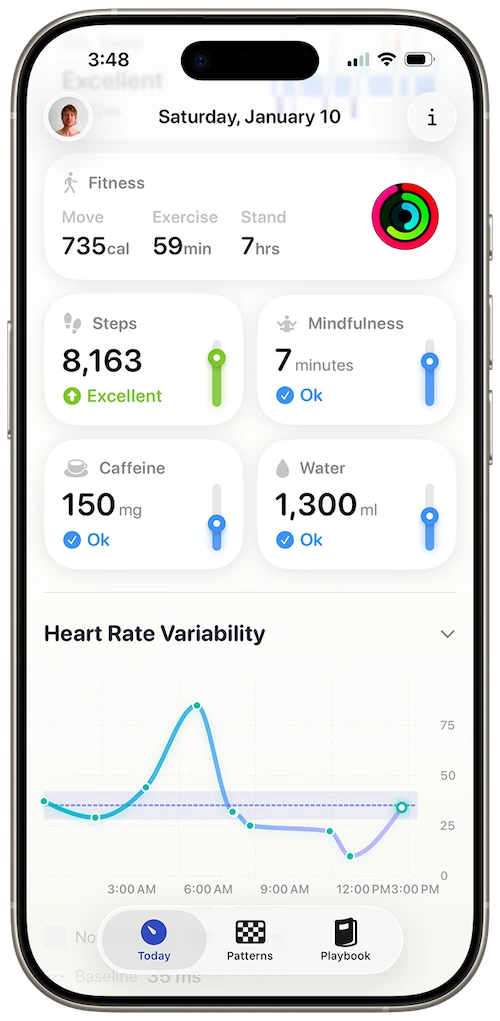
28-day load picture — training plus life stress
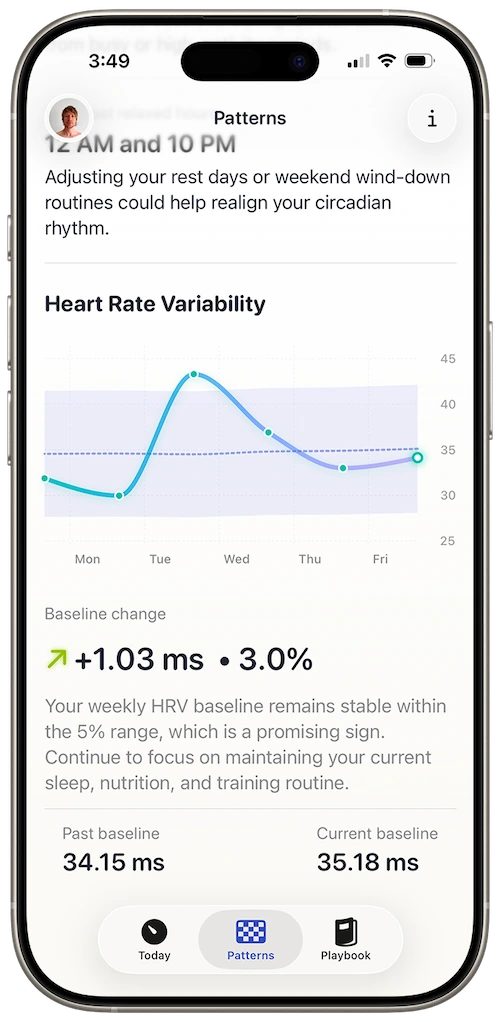
Recovery guidance when suppression persists
Sustained suppression detection
Harvee weights multi-day and multi-week HRV trends — not one low morning after legs day.
Training and life combined
Overtraining isn't only mileage. Work stress and poor sleep count. Harvee reads the full autonomic load.
Personal baseline under volume
Your normal HRV at high fitness may differ from sedentary norms. Harvee calibrates to your trained state.
Permission to deload early
A chart slope is easier to show a coach or training partner than vague fatigue.
You added intervals on tired legs because the plan said so. Harvee showed twelve days below HRV baseline. You deloaded. Last time you didn't — and lost six weeks.
Common questions
Questions people ask before downloading
Will I understand the data?
Harvee translates HRV suppression into clear recovery guidance — you don't need to interpret raw Health exports.
Is this for serious athletes or anyone?
Committed exercisers and competitive amateurs benefit most. Casual gym-goers may prefer general stress tracking.
Can Harvee diagnose overtraining?
Harvee surfaces physiological patterns associated with overload. Diagnosis and treatment belong with qualified professionals.
How is this different from Apple Health?
Health doesn't flag sustained HRV suppression against your baseline. Harvee does.
Does Apple Watch HRV work for this?
Trend-based overtraining detection from overnight watch HRV is a common approach. Harvee is built for it.
App Store reviews
What people said before they tried it — and after
4.7 stars on the App Store
Beautiful app
Jan 24, 2026 — dsteshinA wonderful app that helps manage stress. Harvee the fluffy one is just a cutie.
More useful than Whoop
Dec 26, 2025 — Angie_2906I already had a Whoop and wasn't sure I needed another app. But I found Harvee tracks my stress levels more accurately in daily life - and the insights are actually actionable. I don't need the Whoop anymore.
Simpler than I expected
Jan 4, 2026 — Aaleck0I'd tried other HRV apps and found them overwhelming. Harvee is different - the insights are clear, the presentation is clean, and it actually fits into daily life without becoming another thing to manage.
Try it free
Try it. You'll know within a week.
Adding intervals on tired legs because the plan said so is how forced breaks happen. Log one training block with Harvee — free tier — and see if sustained suppression appears before symptoms. Deload early once; compare the cost to deloading after injury.

Why we built it
Why Harvee exists
Overtraining is recognised in hindsight — stress fracture, month off, plateau you can’t explain. The HRV slope often starts one to three weeks earlier. Harvee reads that slope from Apple Watch while you still feel “fine.”
Catch the slope before the injury.
Requires Apple Watch Series 4 or later. iPhone required.